A Study in Dust and Stone, Session 6: Ancient gods
Session 6 of the scenario "A study in Dust and Stone" for Call of Cthulhu 7th ed, where some light is shed upon the situation

Scene setup
Story Direction Table Roll
[D100 + 1]: [30 + 1] => Development
Development table roll
[D100]: [38] => Roll on Random Events Table
Random events table roll
[D100 + 1]: [3 + 1] => A friend of yours, a professor, gets in touch with you regarding a disturbing discovery he has made. He’s heard what you’ve been researching and has a warning. [well, this seems to fit right in!]
Pasting here the NPC rolls already made in scenario setup for Prof. St. Claire
CHARACTERS INVOLVED OCCUPATION TABLE ROLL
[D100]: [96] => Historian
GENDER TABLE ROLL
[D100]: [70] => Male
NPC KEYWORD MODIFIER TABLE ROLL[D100]: [41] => Brooding
October 27th, 16:15 p.m. | Louisiana State University
Lorenzo: "We need to know more about these people. The LSU library is the place to find out about Tuscan rituals. Plus, I need to talk with Prof. Sterling St. Claire. I telegraphed him my intention to visit, so we should be received immediately."
Remy: "You're the expert here, Mr. Bartolini. We'll do as you say."
We take a streetcar to LSU. The trip is uneventful, but we keep our eyes open.
The library clerk greets us politely.
Lorenzo: "Hello, my name is Lorenzo Bartolini. I am a friend of Prof. St. Claire's. I was wondering if I could do some research here?"
Clerk: "Oh, Mr. Bartolini. Prof. St. Claire warned us you would be coming. He left a message for you."
She hands me a note:
Lorenzo, come see me as soon as you read this. That thing that you're researching. It's bigger than you think.
S.
Lorenzo: "Huh. Well, looks like the library will have to wait."

St. Claire: "Ah, Lorenzo. Finally."
Sterling is a man in his fifties, well-groomed and polite. He teaches Renaissance History at LSU and is a fellow member of the Dante Alighieri Society. He’s no stranger to matters of the occult.
Lorenzo: "Hello Sterling. How are you? It's been a while."
Sterling: "I am perfectly fine, my friend. Who is this gentleman with you?"
Lorenzo: "This is Mr. Remy Fontenot. Let's say he also has a personal interest in the research I am conducting."
Sterling: "I see. I hope that will not be cause of grievance."
He studies the sigil from my family home for several minutes with a magnifying lens, consulting books on his desk.
Sterling [looking at Remy]: "Yes, it is indeed as I feared. Am I free to talk about our association dealings?"
Lorenzo: "Mr. Fontenot is aware of my peculiar interests, yes."
Sterling: "Good. Have you ever heard the name Summanus?"
Lorenzo: "Wasn't he an ancient Roman god of some kind?"
Sterling: "Indeed. Our association 'acquired' from the British Museum a very interesting book on the subject. It was smuggled in the U.S. a few weeks ago. Alas, that book was stolen."
Lorenzo: "Let me guess: Tuscan Rituals."
Sterling is taken aback.
Sterling: "How…? Very few in our association were informed of the acquisition."
Lorenzo: "It so happens that I saw that book a few minutes ago."
I tell him everything about Thibodeaux and the map.
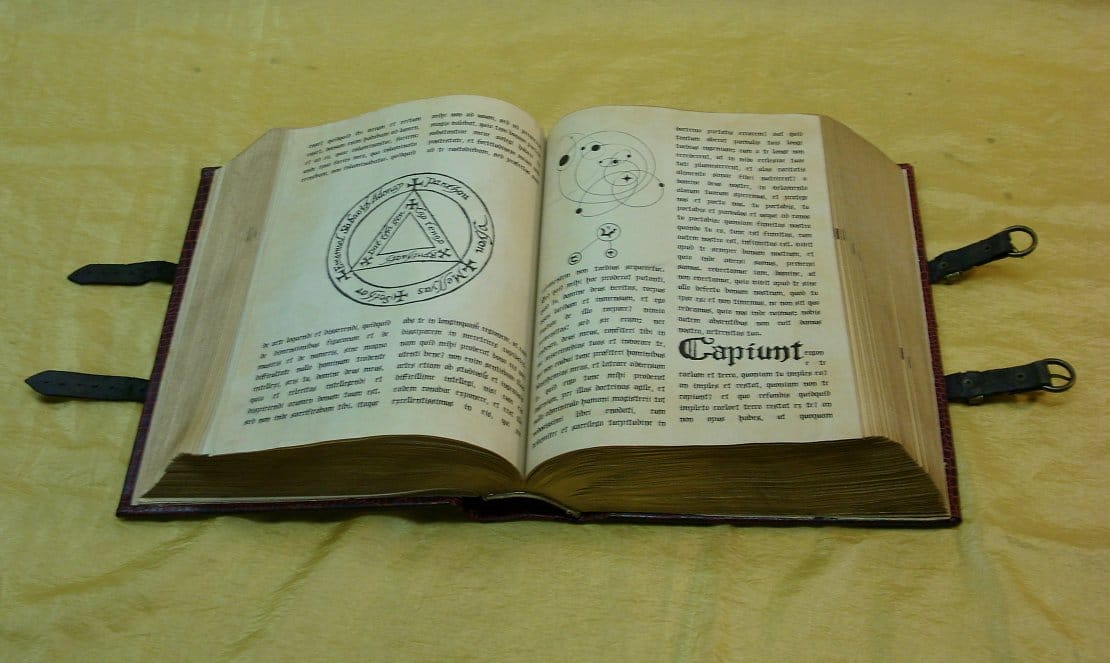
Sterling: "It is as I feared. The Summanus cult is still active. That sigil you showed me? It is a ward to 'defuse death' or 'defuse murder.' I hadn't completed the translation before the book was stolen. Tuscan Rituals is essentially the Summanus cultist handbook—it describes all the worship rituals, dating back to ancient Rome."
Remy: "Let me get this straight. You're saying we are dealing with a religious cult that worships an ancient Roman god?"
Lorenzo: "That seems to be the case."
Remy: "So, how do we deal with these lunatics? What do they want with my sister?"
Lorenzo: "The map she found leads to something they are looking for. Perhaps related to the cult. And Remy, I don't think your sister is safe here in Baton Rouge. Do you have a place she could hide?"
Remy: "Hiding things is in my job description. I can arrange that."
Lorenzo: "While you take care of that, I will do some research. Meet me here at 19:00. We stake out the Golden Kraken tonight."
Remy: "I will also procure a weapon for you, Mr. Bartolini. These lunatics are not to be taken lightly, seems to me."
The LSU library has an occult section. I cross-reference the map symbols and Sterling’s notes.
Library Use skill check
[D100]: [67 < 80] => regular success
References about the ancient Roman god Summanus were easily found. [From Wikipedia]
Summanus (Latin: Summānus) was the god of nocturnal thunder in ancient Roman religion, as counterposed to Jupiter, the god of diurnal (daylight) thunder.
His precise nature was unclear even to Ovid.
Pliny thought that he was of Etruscan origin, and one of the nine gods of thunder.
Varro lists Summanus among gods to whom Sabine king Titus Tatius dedicated altars (arae) in consequence of a votum.
Paulus Diaconus considers him a god of lightning.
The temple of Summanus was dedicated during the Pyrrhic War c. 278 BCE on June 20. It stood at the west of the Circus Maximus, perhaps on the slope of the Aventine. It seems the temple had been dedicated because the statue of the god which stood on the roof of the temple of Jupiter Capitolinus had been struck by a lightning bolt.
Every June 20, the day before the summer solstice, round cakes called summanalia, made of flour, milk, and honey and shaped as wheels, were offered to him as a token of propitiation: the wheel might be a solar symbol. Summanus also received a sacrifice of two black oxen or wethers. Dark animals were typically offered to chthonic deities.
Saint Augustine records that in earlier times Summanus had been more exalted than Jupiter, but with the construction of a temple that was more magnificent than that of Summanus, Jupiter became more honored.
Cicero recounts that the clay statue of the god which stood on the roof of the Temple of Jupiter Optimus Maximus was struck by a lightning bolt: its head was nowhere to be seen. The haruspices announced that it had been hurled into the Tiber River, where indeed it was found on the very spot indicated by them.
The temple of Summanus itself was struck by lightning in 197 BCE.
Mount Summano (elevation 1291 m), located in the Alps near Vicenza (Veneto, Italy), is traditionally considered a site of the cults of Pluto, Jupiter Summanus, and the Manes.
The area was one of the last strongholds of ancient Roman religion in Italy, as shown by the fact that Vicenza had no bishop until 590 CE.
Archeological excavations have found a sanctuary space that dates to the first Iron Age (9th century BCE) and was continuously active until late antiquity (at least the 4th century CE). The local flora is very peculiar, because it was customary in ancient times for pilgrims to bring offerings of flowers from their own native lands.
The mountaintop is frequently struck by lightning. The mountain itself has a deep grotto named Bocca Lorenza, in which, according to local legend, a young shepherdess became lost and disappeared. The story might be an adaptation of the myth of Proserpina, who was abducted by Pluto.
Ok, that's plenty of information. Now let's dive into Tuscan Rituals.
[Summanus apparently is an Great Old One created by writer Brian Lumley. I looked for inspiration in his short story What Dark God]
Library use skill check
[D100]: [4 < 80] => extreme success
The information about Summanus I find in Sterling's notes describe a god quite different from the one worshipped by the Romans.
Appearing as a grotesque, mouthless humanoid with pale tentacles sticking out from under his robes, Summanus can use these appendages to siphon blood from his victims. Talk about benevolent gods.
He is also referred to as a Great old One, whatever that means.
There's pages and pages that describe the "Liturgy of Summanus", practices a devotee must follow to worship his god. In particular there's a ritual describing an offering of three wheat-breads in the shape of wheels with ribbed spokes [this is from Brian Lumley's short story]. Bread offerings are not unusual in European liturgies.
Q: Do I find anything useful about the sigil in my family house?
[D100]: [13] => no
The notes regarding the sigil are incomplete, there's not much I can find out about it. It's a ward to 'defuse death' or 'defuse murder'. Why was it on my library floor? No answers here.
I look for information about the map next.
Library Use skill check
[D100]: [46 < 80] => success
Q: What does the map represent?
Verbs table roll
[D10 + D100]: [7 + 50] => offend
[D10 + D100]: [7 + 51] => oppress
[D10 + D100]: [8 + 97] => recite
[D10 + D100]: [4 + 36] => decay
[D10 + D100]: [8 + 66] => plead
In Tuscan Rituals are several reports of episodes happened in Etruscan times. Apparently Summanus was quite an oppressive god. He was easily offended by even the slightest misconduct of his followers. When an unfortunate worshipper became the target of his wrath, a curse of decay was bestowed upon him. His body would slowly writhe and decompose. The process took days and it was extremely painful, leading to an excruciating death. The only way for the curse to be lifted was for the unfortunate fellow to recite the ritual of pleading. Details of the ritual are missing, but it is stated that to get better, the repentant must navigate through the labyrinth of faith.
Well well. Maybe this is not just a figure of speech, but an actual labyrinth after all. And at its center, the ritual to lift the curse of decay? There's no reference to where the labyrinth might actually be, though.